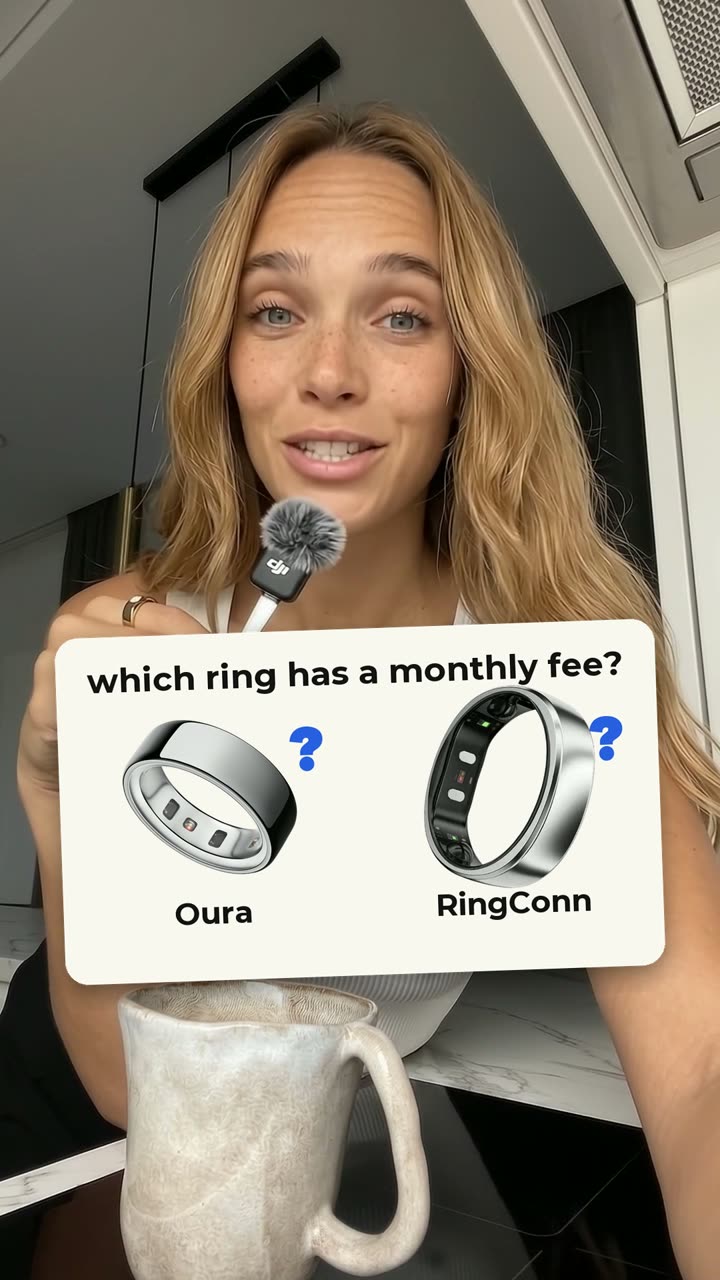
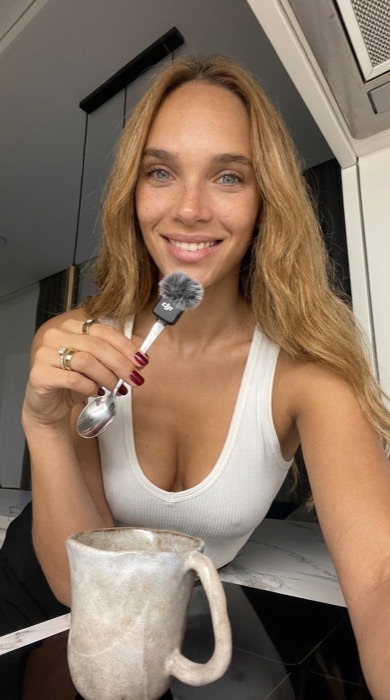
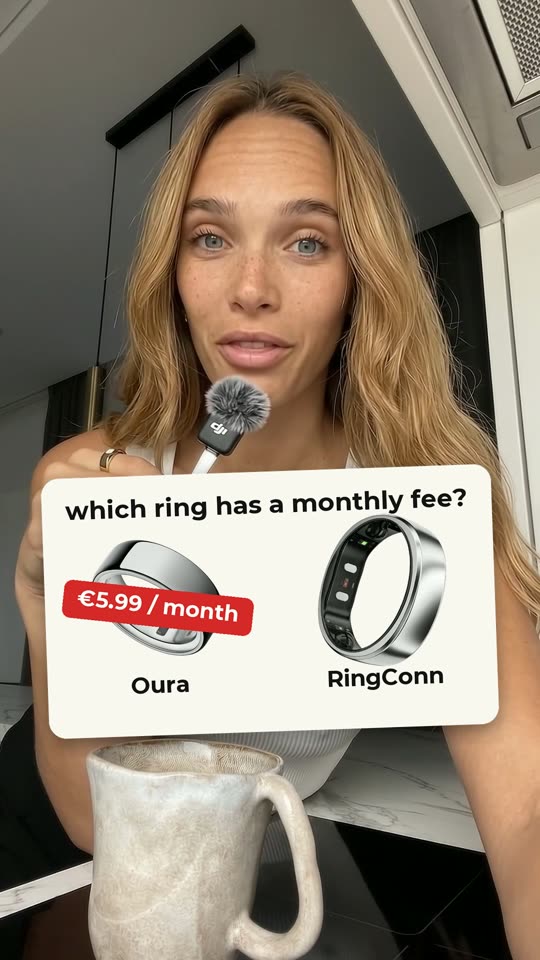
A smart ring without a subscription, explained through a couple's morning: he pays every month to learn he slept badly.
"My boyfriend pays six euros a month… to find out he slept badly."
30 s · 3 variants · real product pages on screen
Feeling: playful teasing → "wait, mine is free"
Tap for sound
Babbel
Learning German told through one very German mistake: der Kuss vs. die Kasse.
"Three years in Berlin… and I asked a cashier for a kiss."
32 s · 3 variants · quiz opener
Feeling: embarrassment → laughing at yourself
Tap for sound
Dalma
Pet insurance that works abroad, shown on a map before the sentence is over.
"My dog has been to seven countries. His insurance? Worked in one."
34 s · 3 variants · animated map hook
Feeling: frustration → relief
Tap for sound
NARA
A plant protein for people who get bloated, told like an honest review from a friend.
"By lunch he's fine… and my jeans are unbuttoned."
39 s · 3 variants · honest-review tone
Feeling: quiet insecurity → finally comfortable
Why most AI ads get skipped
People don't decide to scroll. Two old reflexes decide for them, in under a second.
01"That's an ad."
Once people recognise a sales pitch, they put their guard up and stop listening. Polished, generic AI ads trigger this instantly, and they will only look more alike as everyone uses the same tools.
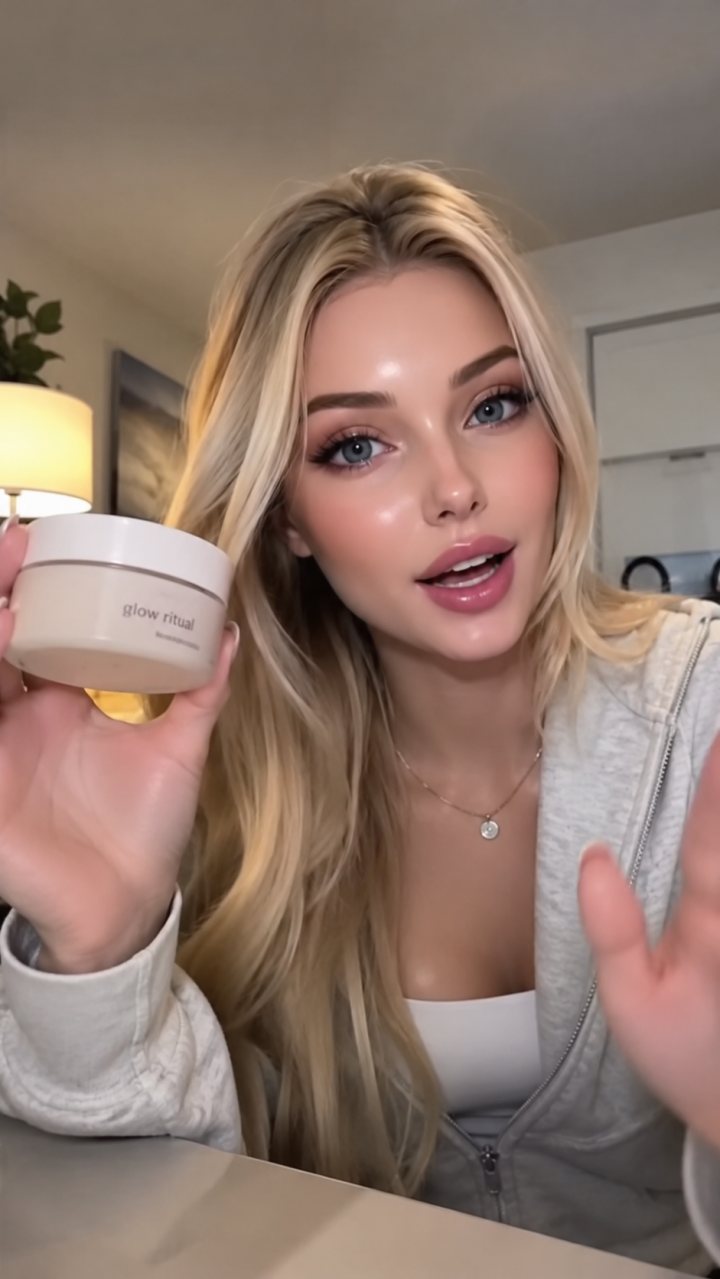
✕ Typical AI ad
Product shoved at the lens, gibberish labelRubbery, blurry handFrozen "OMG" face, doll skin
✓ Ours
Opens with a question you want to answerA real morning: mic, coffeeThe brand arrives as the answer
02"Something's off with that face."
Our brains read tiny details in a face to decide whether someone can be trusted. Waxy skin, a mouth that moves too perfectly, a room that's too clean: the brain can't read the person, so it builds a wall. That's the uncanny valley, and most AI UGC lives in it.
✕ Typical AI face
Plastic shine, zero poresBright, identical teethGlassy, too-perfect eyes
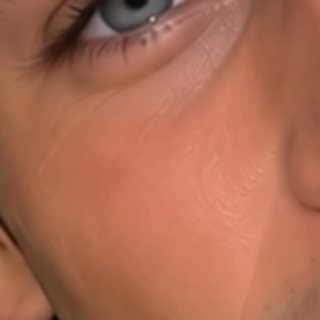
Zoomed in: smooth like plastic. The brain can't read it.
✓ Ours
Pores, beard, smile linesOne AirPod in: a life of his ownHarsh, uneven train light
Zoomed in: texture, creases, phone noise. Reads as a person.
The "typical" examples were generated on purpose to show the most common AI tells. Nobody real is shown.
Viewers can usually tell an ad is AI-made even when they can't say why, and those ads are remembered less. Our work is built to get past both reflexes.
Past the first: it feels like a story, not an ad
We don't sell features. We start from a feeling your customer already has, and humour is just one of them.
One real feeling, from the first secondEmbarrassment, frustration, relief, pride, a little guilt. We find the moment your customer actually lives through and open with it, not with the product.
The face, not the eventWe show how it feels: the boyfriend's long pause, her laugh at her own mistake. People buy on emotion and justify with logic.
Told by someone who already solved itThe character isn't suffering on screen. They've been there, found the answer, and tell it like a friend would. That's where the quiet authority comes from.
Two people, not one talking headA boyfriend, a cashier, a dog. A relationship on screen holds attention better than someone staring into the lens.
Your brand early, but never loudYour colour in the outfit, your name said out loud within 5 seconds, real proof on screen. It feels like a recommendation, not an interruption.
Past the second: the face feels real
An AI model only animates what's already in the picture. If the starting image has no real texture, the video can't have it either. So realism isn't a filter we add at the end; it comes from where every shot starts.
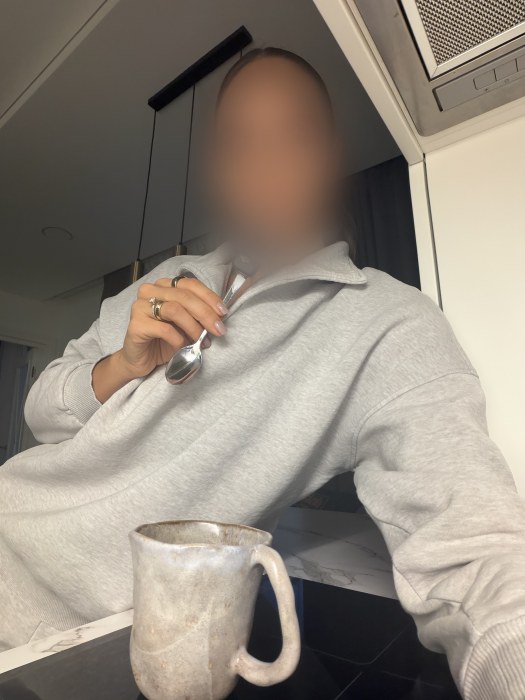
1. A real phone photo: real kitchen, real light (face hidden)2. A new AI character placed into that exact photo3. The finished ad, with the real product page on screen
Every scene starts from a real phone photoUltra-wide selfie angle, lived-in rooms, uneven daylight. Never stock photos, never AI-made backgrounds.
The background is never replacedSwapped backgrounds are what makes AI look waxy. Only the person changes; the room, the light and the mess stay real.
A different outfit for every placeLike real filming days. The same top in every scene is a giveaway.
Characters with a life of their ownOne earbud in, a small mic clipped to a spoon, gold hoops, chipped mugs. AI averages everything into the same person; these small quirks are what make someone look like somebody.
One locked voice and accent per characterSame voice, same energy in every clip, so the character feels like one person, not a collage.
Your product is never AI-drawnAI loves to redraw logos, labels and rings. We show your real photos and pages instead, and check every clip frame by frame before you see it.
Leonor: one AI character, kept consistent
Brands often ask whether an AI face can stay the same across a whole campaign. Leonor is our own long-running test of exactly that.
Leonor AbreuOps consultant and mum of two in Lisbon · AI-generated creator
Free website tipdinner from leftoversChatGPT homework tutorreal screens, real prompt"My AI edited this"gift for followers
Same face in every video: the beauty mark on her left cheek, gold hoops, red nails
One locked voice since day one
Different rooms, outfits and days, like a real creator's feed
Every story is true: the tools, screens and results in her videos are real tests
Clearly labelled as AI-generated, as Meta and the EU AI Act require
For brands this means a recurring face for a whole campaign, or your own brand character, without booking a creator again.
Packages
One concept = one idea, filmed once, cut into 3 versions with different openings, so you can test which hook works.
Test ad
€390
To see if this works for your brand.
1 concept, 3 hook variants
Script approved by you first
Delivered in 5 working days
Launch Most picked
€990
Enough to run a proper creative test on Meta or TikTok.
3 concepts, 9 videos in total
Different angles and characters
Delivered in 10 working days
Monthly
€1,490 / month
For brands already spending on ads and replacing tired creatives.
4 new concepts a month, 12 videos
Based on what performed last month
Your recurring AI character, if you want one
Always included: script, AI characters, voice, full editing, captions, 9:16 for Reels and TikTok, one round of changes, and paid usage rights with no time limit. There's no creator fee to renew and no product to ship.
Editing, your way: in our native, scroll-stopping style (like the ads above), or matched to your brand guidelines: your fonts, colours, logo and end card. Same price either way.
How long does one ad last?
On Meta, most brands refresh prospecting creatives every 2–4 weeks, as soon as frequency climbs and the cost per sale starts rising. The bigger the budget, the faster an ad wears out.
A brand spending up to about €5,000 a month typically needs 4–8 new concepts a month to keep results steady. That's why the monthly package is built around 4 concepts with 3 hooks each.
Rates sit between Fiverr AI gigs (around $25–200 per video) and AI UGC agencies (around $160–500 per video, monthly retainers from $1,500). Sources: Fiverr, creativemarketing.ai, Twirl, Admiral Media, Motionbox (2026).
Emotion first. Funny is just one of them.
People don't skip what makes them feel something. We write every ad around one small, true moment your customer recognises (the laugh, the cringe, the relief) and let the product be the answer to it.
As AI makes ads cheap and endless, the feed fills with ads that all look the same. What still stands out is taste: the right feeling, the right face, the right second to cut.
Prices, claims and products on screen are always the real ones, taken from your website. AI makes the people; it never redraws your product.
The ads above are spec work, made independently and not commissioned or endorsed by the brands. The people in them are AI-generated.